The short answer
The most common billing mistakes in small businesses are small and repeated: a price typed from memory, a discount nobody approved, GST applied the wrong way, a UPI payment assumed rather than checked, and refunds given without the original bill. None of them looks serious on one bill. Repeated over a month, they cost real money and make the day's figures impossible to trust. Each has a simple fix, and most of the fixes are habits rather than purchases.
Why small slips matter
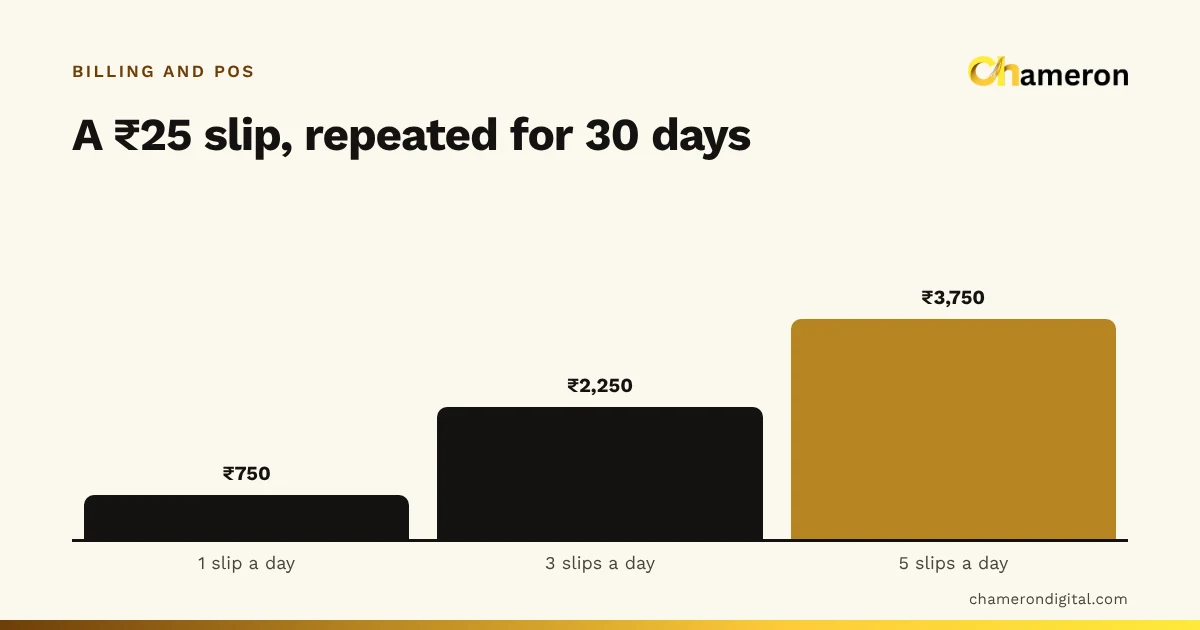
Take a shop where the counter under-charges by ₹25 on one bill a day: a wrong price here, a forgotten item there. Over 30 days of trading:
| Slips a day | Lost in 30 days |
|---|---|
| 1 | ₹750 |
| 3 | ₹2,250 |
| 5 | ₹3,750 |
And that ₹3,750 comes entirely out of profit. If the shop makes a 25% margin, it needs ₹15,000 of extra sales just to earn the same amount back (₹3,750 ÷ 0.25). Over-charging is no better: the money stays, but the customer may not come back.
The mistakes below are grouped by where they happen.
Mistakes at the counter
1. Typing prices and codes by hand
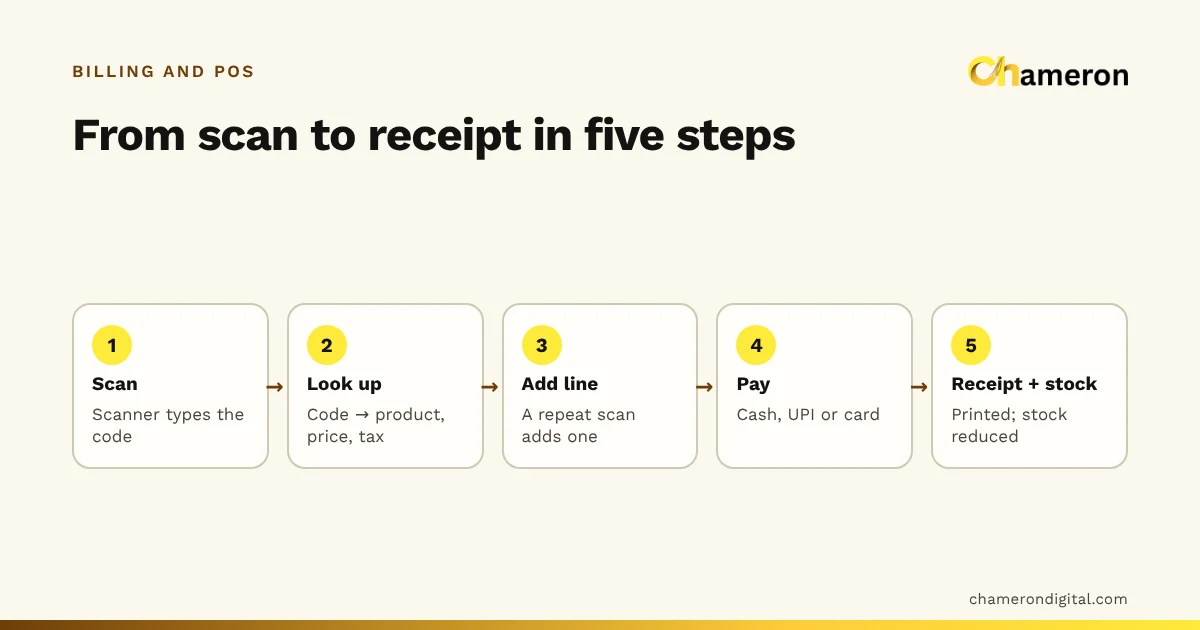
A typed price is a guess under pressure. A typed item code can be one digit off and bill a different product, which also leaves stock wrong for two items. Fix: barcode every item, including loose and locally made stock, and scan it. Where scanning is not possible, pick the item by name from the product list so the price comes from the list. Our guide to how barcode billing works covers the setup.
2. Billing the wrong size, colour or pack
Billing a medium when the customer took a large keeps the money right and the stock wrong for both sizes. Fix: set up each size and colour as its own item with its own barcode. See size and colour variants.
3. Wrong quantities on multiples and loose items
Six identical items scanned five times, or 1.5 kg keyed as 15. Fix: count multiples aloud with the customer, use the quantity field rather than repeated scanning for large counts, and read the total weight back before completing.
4. Restarting bills instead of holding them
A customer steps away to fetch one more thing; the cashier cancels and starts again, or carries on and adds the next customer's items. Fix: put the bill on hold, serve the next person, then pick it up. Fewer restarted bills means fewer duplicates and gaps.
Pricing, discount and GST mistakes
5. Discounts without limits
When anyone can give any discount, discounts grow quietly. A 10% discount on a ₹600 item with ₹200 profit takes ₹60, which is 30% of that profit. Fix: decide who can give how much, set the limits in the software, require a reason above the limit and review large discounts weekly. The discount calculator shows what each discount really costs.
6. Setting up an item as GST-inclusive when you meant exclusive
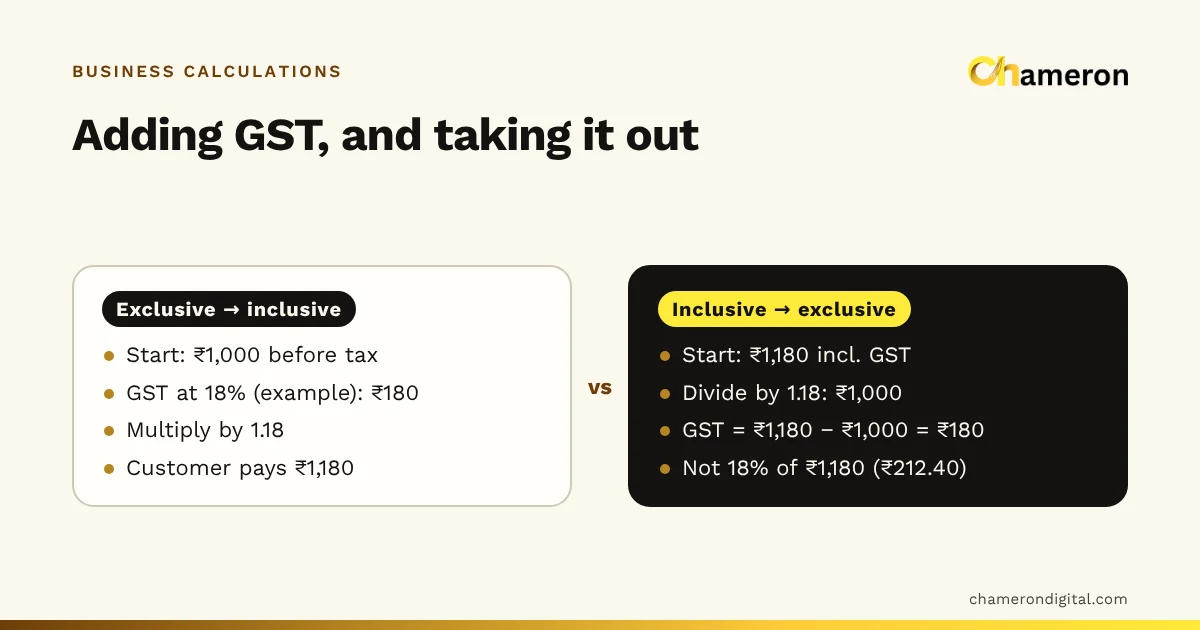
This one is easy to miss because the bill looks normal. Suppose you intend to sell an item for ₹1,000 plus GST, at an example rate of 18%, so the customer should pay ₹1,180. If the item is set up with ₹1,000 as a GST-inclusive price:
| Intended (exclusive) | As set up (inclusive) | |
|---|---|---|
| Customer pays | ₹1,180.00 | ₹1,000.00 |
| GST you owe | ₹180.00 | ₹152.54 |
| Your revenue | ₹1,000.00 | ₹847.46 |
The shop loses ₹152.54 on every unit, and nobody at the counter notices. Fix: decide whether your prices include tax, set every item the same way and check a sample bill by hand. Our guide to GST-inclusive and exclusive pricing and the page on calculating GST from an inclusive price walk through the arithmetic, and the GST calculator checks it.
7. Wrong tax rate or HSN code on a product
A product created in a hurry often copies the tax settings of the last one. Fix: ask your accountant to review the tax rate and HSN code on your product list once, especially for new categories. Rates and rules change, so confirm current rates with your accountant or on the official GST portal.
8. Old prices after a supplier increase
Cost goes up, the shelf price stays the same, and margin shrinks without anyone deciding it should. Fix: update selling prices when you receive a delivery at a new cost, and look at a report of items sold below cost or at thin margins.
Payment and credit mistakes
9. Recording UPI as cash, or cash as UPI
The bill total is right, but the day close shows the drawer short and UPI over, or the reverse, and someone spends half an hour finding out why. Fix: record the payment method the customer actually used, and record split payments as two parts.
10. Handing over goods before the UPI payment arrives
A customer shows a payment screen and walks out; the money never lands. Fix: check the credit on your own payment app or sound box before handing over goods, every time, however busy the counter is. Billing software records a UPI payment when the cashier marks it; it does not prove the money arrived. The glossary entry on UPI explains the basics.
11. Credit that is not on the customer's record
"Pay next time" written on a slip, or remembered by one person, is the credit most likely to be lost. Fix: put every unpaid amount on the customer's record against the bill, so the balance is visible to whoever is at the counter.
Returns, cancellations and records
12. Refunds without the original bill
A free-typed refund may return more than was paid, or return money without returning stock. Fix: take returns and exchanges against the original bill, so the original price, discount and tax come back, and issue a credit note where GST applies.
13. Cancelling or deleting bills without a reason
Bills that disappear make the numbering, stock and cash impossible to reconcile. Fix: cancel, never delete; require a reason; and limit who can cancel. Invoice numbering rules for GST should be checked with your accountant.
14. Skipping the day close
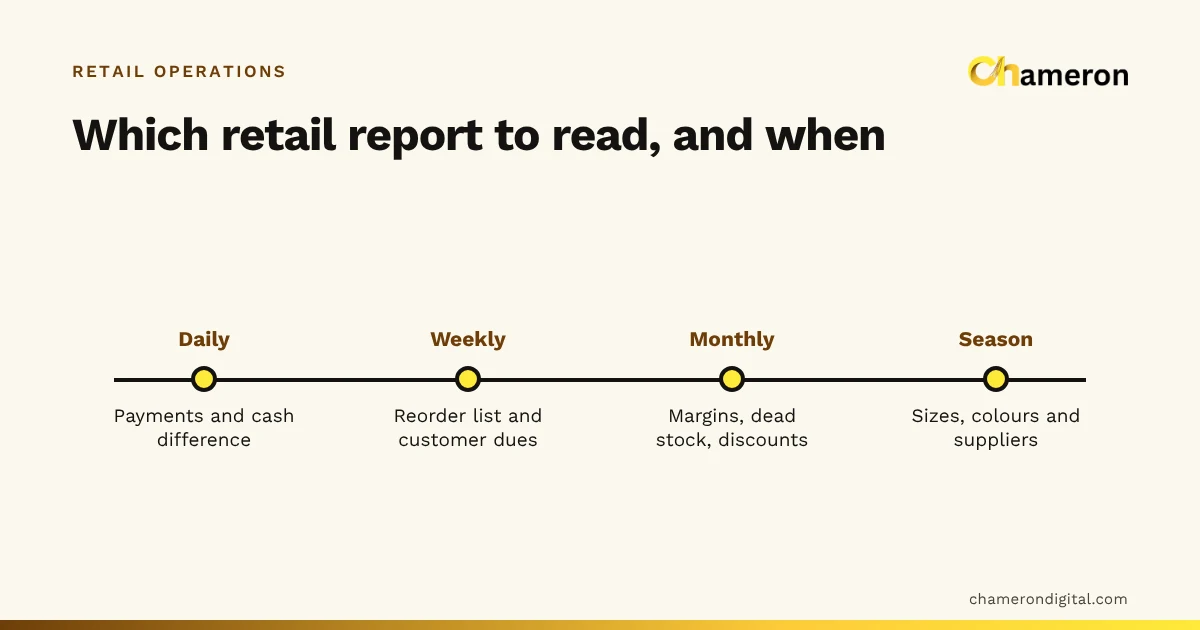
Without a daily count, a short drawer on Tuesday is found at month end, when nobody remembers. Fix: close each day by counting cash against what the system expects, ideally counted blind by the cashier, and look at the day's cancellations, big discounts and sales below cost. Our guide to retail reports that matter suggests what to look at.
Quick reference
| Mistake | Warning sign | Fix |
|---|---|---|
| Typed prices and codes | Stock wrong on items that "should" be fine | Scan; price from the list |
| Wrong variant or quantity | Size-wise stock does not match the shelf | Variants with their own barcodes |
| Discounts without limits | Margin falling while sales hold | Limits by role, weekly review |
| Wrong GST setting | Tax and revenue do not match intended prices | Check a sample bill by hand |
| UPI not checked | Payments recorded that never arrived | Check the credit before handing over |
| Credit off the record | Customers dispute what they owe | Credit on the customer's account |
| Loose refunds | Refunds without matching returned stock | Returns against the original bill |
| No day close | Shortages found weeks later | Count every day |
How software helps, and where it cannot
Good billing software removes several of these mistakes by design: prices come from the list, tax is calculated the same way every time and returns are tied to the original bill. In BILL OS, returns and exchanges are taken against the original bill with a GST credit note, and Guardian lists discounts, sales below cost, cancelled bills and short cash drawers worth a second look; the reports and exports page describes it.
Software cannot check that a UPI payment arrived, that the right size went into the bag or that a cashier counted multiples correctly. Those stay with people and habits.
The bottom line
Billing mistakes rarely come from one big error. They come from small slips repeated every day under pressure. Scan instead of typing, set prices and GST up correctly once, put limits on discounts, check UPI before handing over goods, take returns against bills and close every day with a count. Do that, and the day's figures become numbers you can trust.
Questions people ask
What is the most common billing mistake in a small shop?
Typing a price or item code by hand instead of scanning or picking it from a price list. It is quick under pressure, and it is where wrong prices, wrong items and wrong quantities usually start.
Should I correct a wrong bill by editing it?
No. Cancel it with a reason and issue a fresh bill, or take a return against it. Editing a completed bill breaks the link with stock, payments and tax records, and leaves no trail of what changed.
How often should I review discounts and cancellations?
Glance at them every day at closing and look properly once a week. A daily look catches problems while people still remember the bill; a weekly look shows patterns.
Is a cash shortage always theft?
No. Most differences come from wrong change, a UPI payment recorded as cash, a pay-out nobody wrote down or a bill not completed. Find the cause before drawing conclusions; small, unexplained shortages that repeat are what need attention.