
Retail Stock Management: A Practical Guide for Shop Owners
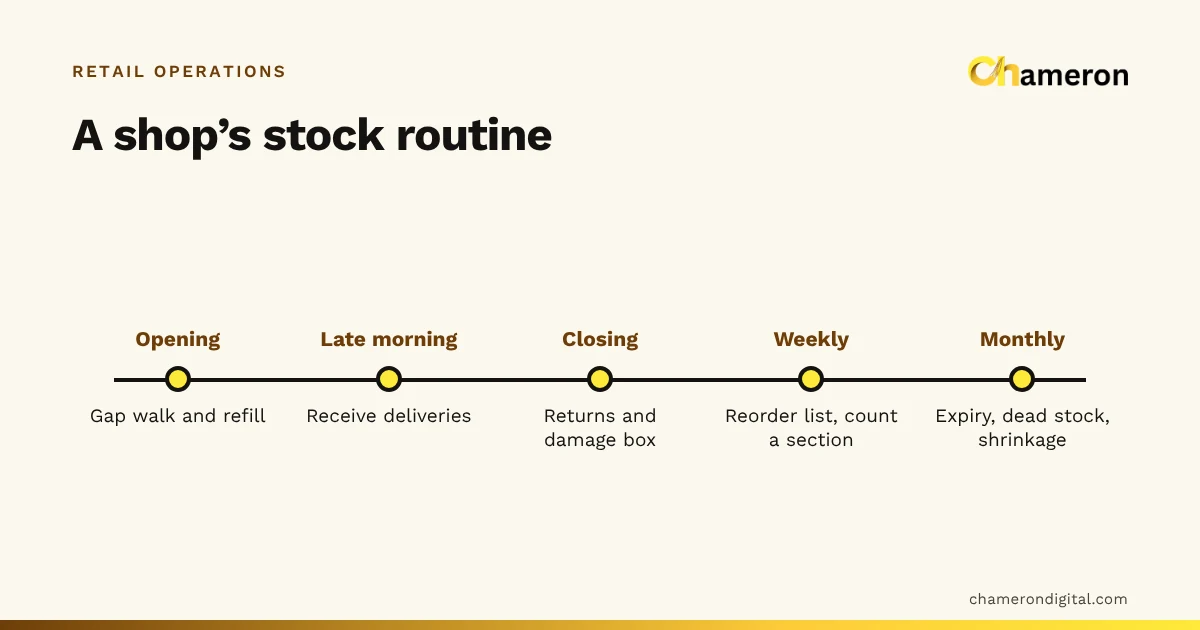
Stock stays under control when the same few routines happen on the same days. Here is a working routine for receiving, shelves, transfers, returns, shrinkage, counts and reorders.
Blog · 5 articles
Retail runs on small routines done every day: receiving a delivery, labelling it, selling it, counting it and closing the day. When the routines are clear, the numbers agree.
These guides cover the routines of a retail shop, from naming products and handling sizes and colours to counting stock and reading the reports that matter.
Stock stays under control when the same few routines happen on the same days. Here is a working routine for receiving, shelves, transfers, returns, shrinkage, counts and reorders.
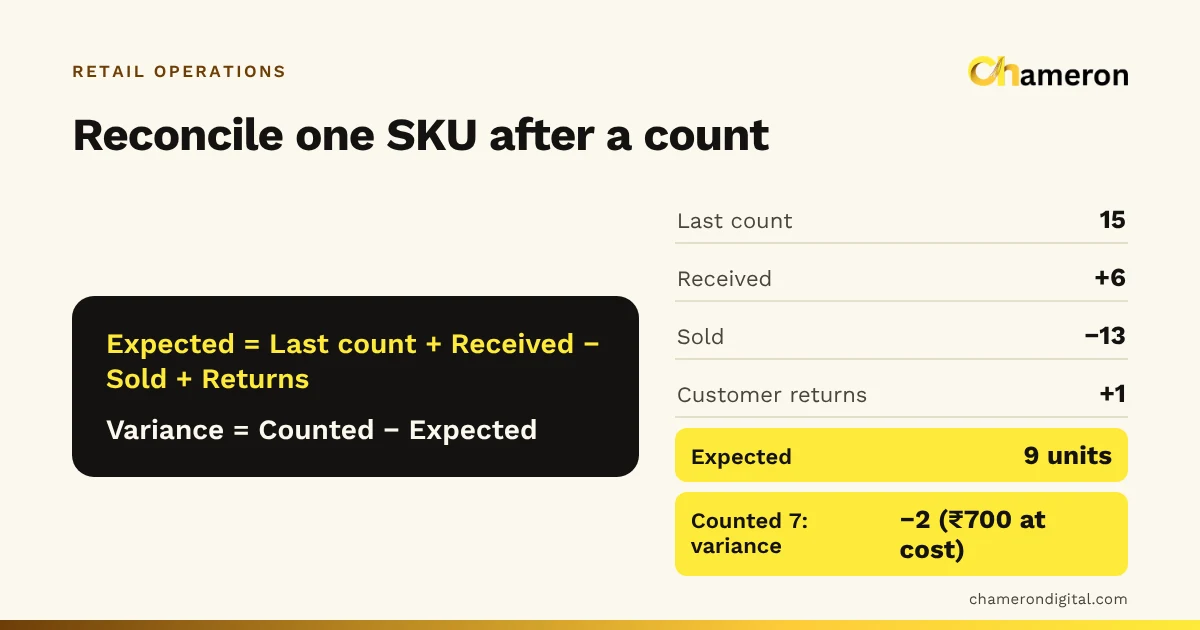
A stock count is only useful if every difference is explained. This method keeps counts short and honest, and turns the differences into decisions.
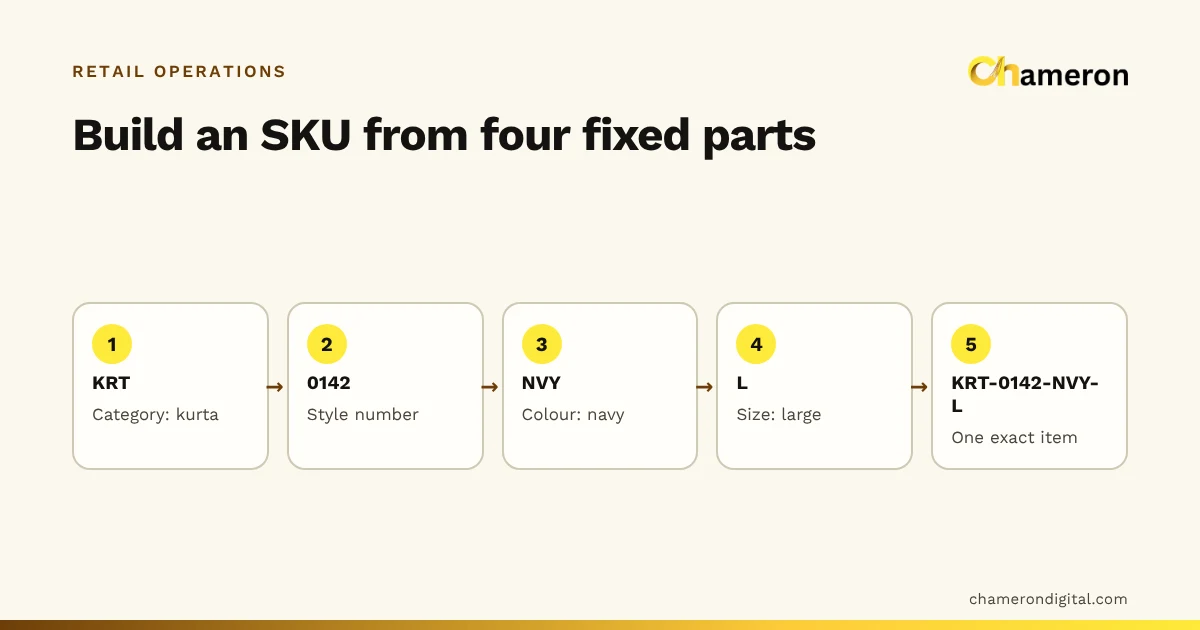
An SKU is your own name for one exact item you stock. A good pattern makes billing, counting and reordering easier for years; a bad one causes confusion from the first week.
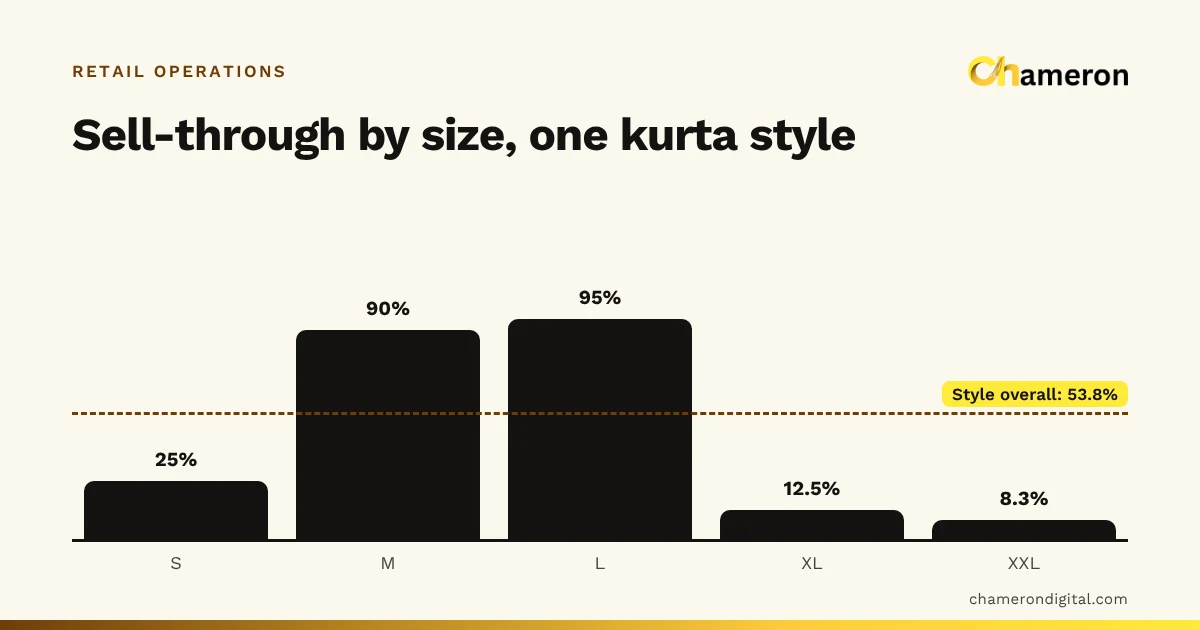
In a clothing or footwear store one style can mean twenty different items on the shelf. Unless each size and colour is tracked on its own, stock reports will say you have something the customer cannot buy.
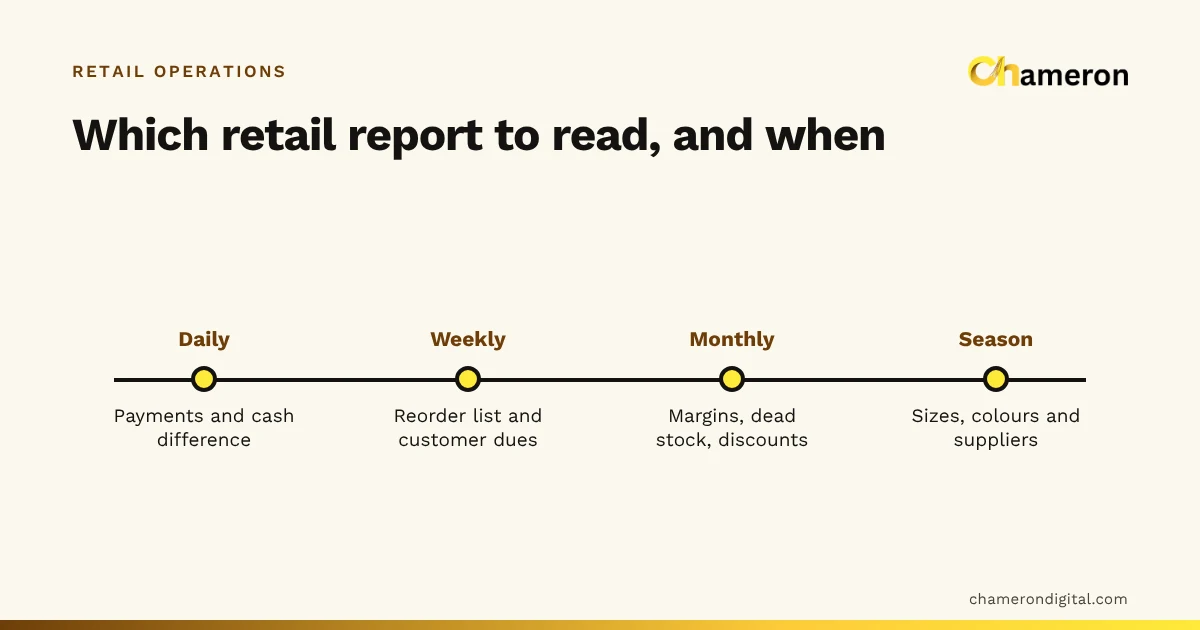
Software can produce dozens of reports. A handful, read at the right time and turned into a decision, do most of the work of running a shop.
Free calculators